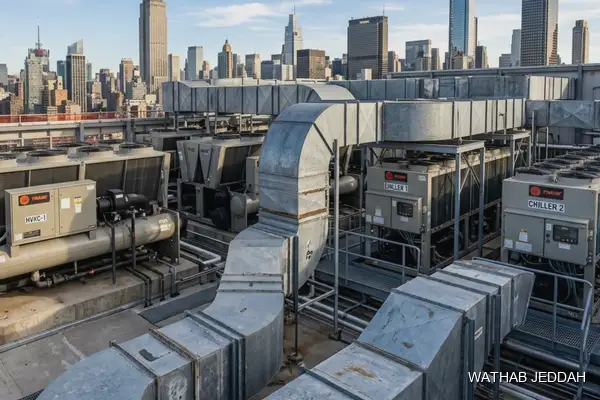
Service details and why it matters
Wathab Jeddah AC Services specializes in Scheduled AC Maintenance in Jeddah because proper maintenance is the difference between a unit that serves you for years and one that breaks down every season. We do not stop at the visible symptom: we examine the whole system — supply voltage, refrigerant charge, and the condition of the compressor, capacitor, and contactor — to identify the root cause and treat it before a minor fault turns into an expensive repair.
We use spare parts matching manufacturer specifications and provide a documented warranty on repair work where applicable, and we explain your unit's condition clearly before starting, with pricing announced in advance. Whether you need a compressor, capacitor, or control board replaced, or a leak repaired, a qualified Wathab Jeddah technician arrives equipped to finish the job in a single visit whenever the findings technically allow it.
Technical problems we solve in Jeddah
Maintenance faults require separating an electrical cause from weak airflow or a refrigeration-circuit issue. The inspection starts with the symptoms and the basic measurements, then moves to specialized tests — instead of swapping multiple parts on trial and error.
In the Scheduled AC Maintenance in Jeddah service the customer is told what was measured, what has been proven and what remains a possibility, and the treatment options and their cost before execution. If the fault is intermittent, the conditions under which it appears and the way to track it are documented instead of offering a promise that cannot be verified.
Why choose Wathab AC?
- Quality parts to manufacturer specifications: We use replacement parts built to specification that withstand Jeddah's heat and keep performing for the long haul.
- Speed in emergencies: A total loss of cooling gets top priority, and we work to reach you in the shortest possible time.
- Clean, tidy workmanship: We leave the worksite exactly as we found it and return everything to its place once we finish.
- Trust built by delivering: We honor what we commit to — which is why customers across Jeddah recommend us to the people they know.
Service quality comparison
A comparison between an in-place wash and a full-dismantle wash, to choose what suits your unit:
| Criterion | In-place wash | Full-dismantle wash |
|---|---|---|
| Cleaning depth | Suitable for moderate soiling | The deepest option for stubborn deposits |
| Time required | Faster and lower in cost | Longer, but more thorough |
| Best suited to | Regular periodic maintenance | Units neglected for a long time |
| Effect on efficiency | A good, tangible improvement | Near-complete recovery of performance |
How our Jeddah team works
- Request intake: Collecting the unit type, a description of the problem, and the essential site details.
- Recording the symptom and the conditions under which it appears: The step starts from what matches the Scheduled AC Maintenance in Jeddah service, instead of applying a generic checklist to every unit.
- Taking the electrical, airflow, and cooling measurements: The finding is tied to a measurement or test that can be explained to the customer.
- Comparing the repair options and their value: No costly work begins before the scope and price are made clear and approval is obtained.
- Testing and handover: Running the unit, reviewing the function tied to the reported issue, and recording the follow-up instructions.

Tools and equipment we use
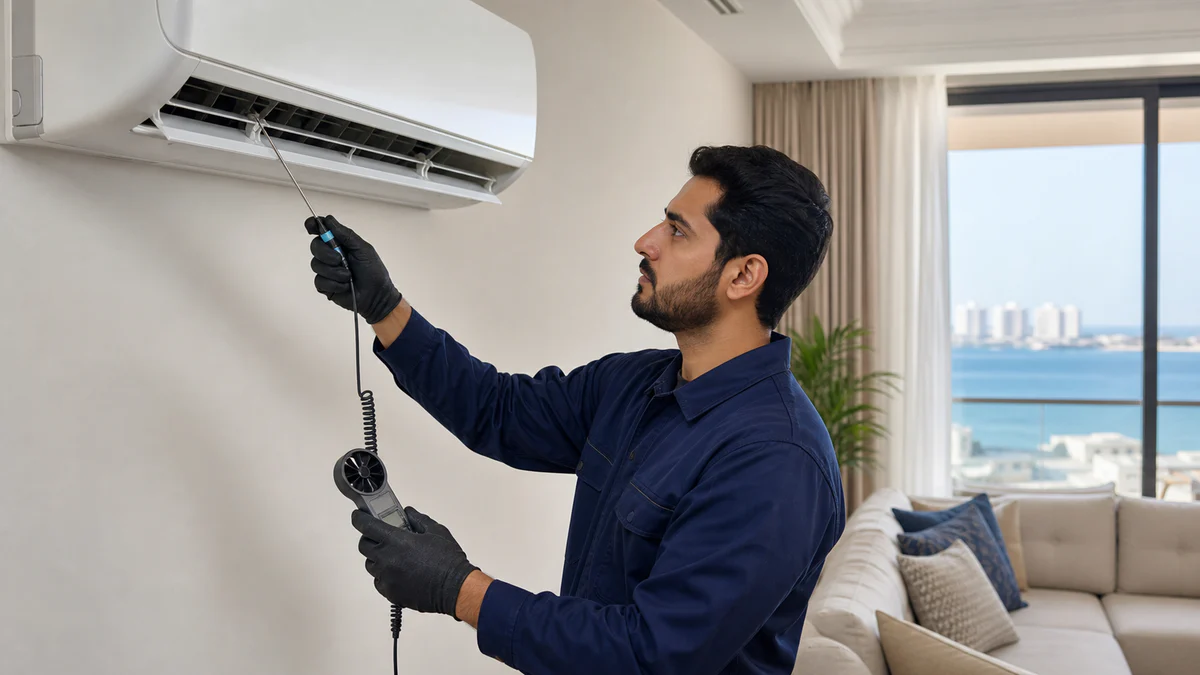
- A thermometer and an airflow meter: Used when the inspection findings call for it, not merely to be listed as part of the service.
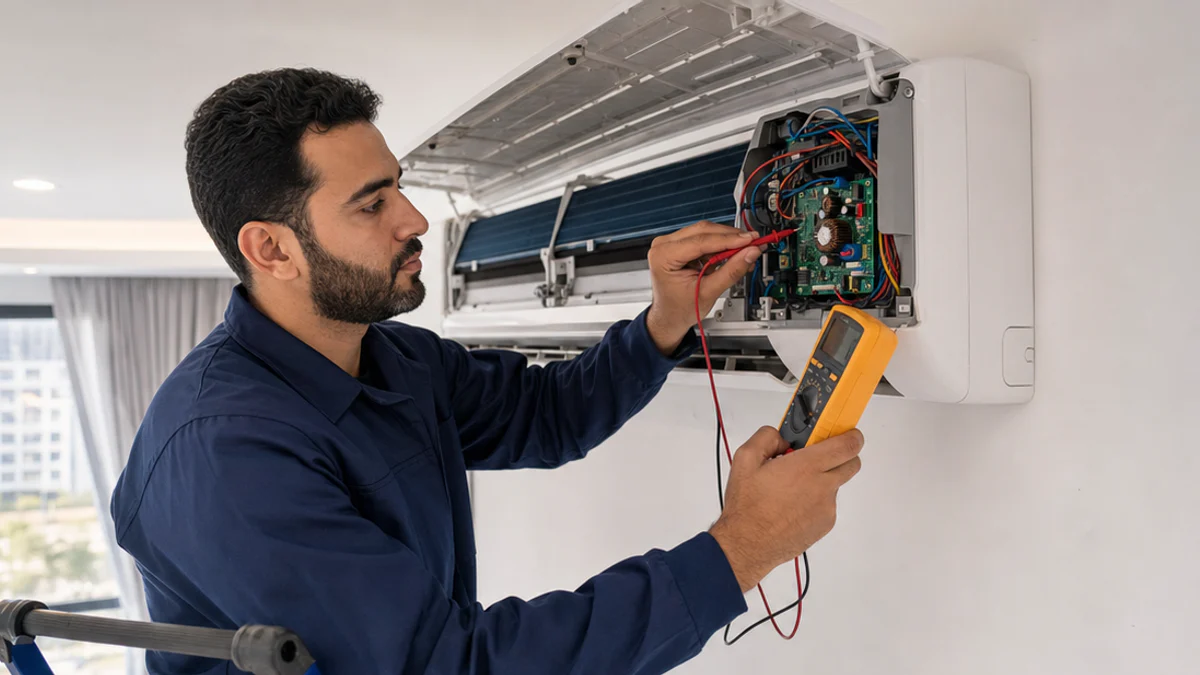
- A multimeter and a clamp meter: Used when the inspection findings call for it, not merely to be listed as part of the service.
- Drain inspection tools: Used when the inspection findings call for it, not merely to be listed as part of the service.
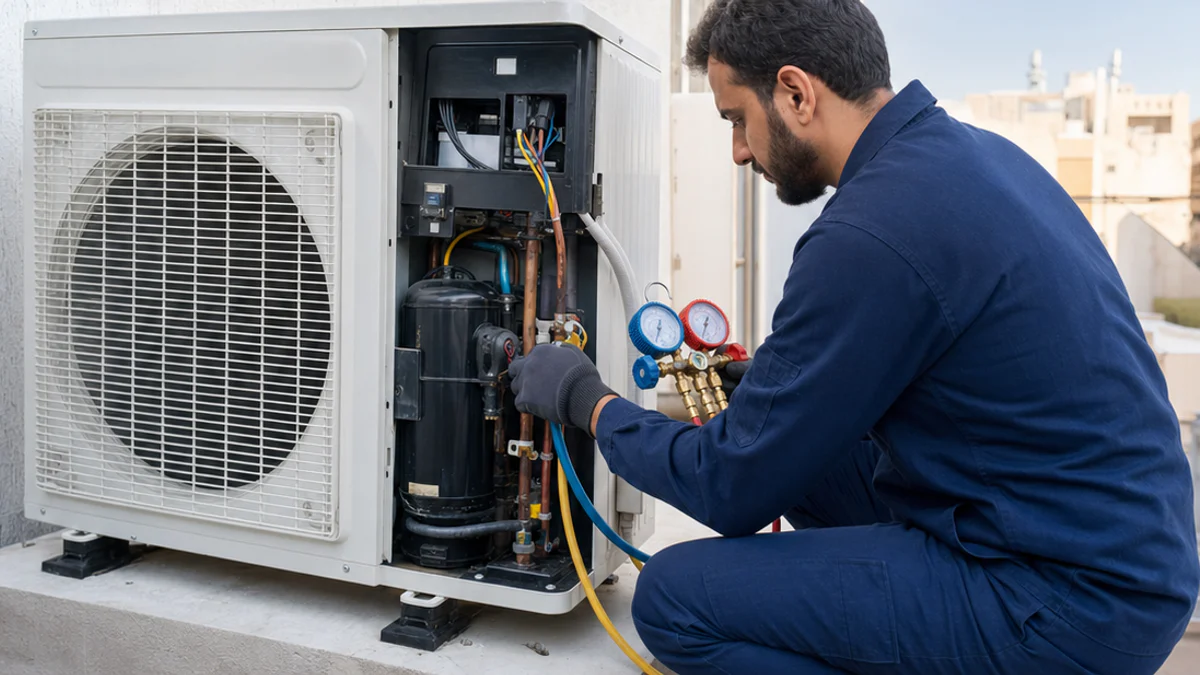
- Refrigeration-circuit instruments when a finding calls for them: Used when the inspection findings call for it, not merely to be listed as part of the service.
AC types and systems we serve
- Japanese and Korean brands: Expertise in servicing high-efficiency systems and their specialized parts.
- Gulf and local brands: Parts availability and fast repairs for the units most common in the Saudi market.
- Older and modern systems: We handle conventional units and smart inverters with the same precision and professionalism.
- Every cooling capacity: From one-ton units for small rooms up to large systems for expansive spaces.
Environment and climate factors in Jeddah
We do not attach the Scheduled AC Maintenance in Jeddah service to a randomly picked district. This page covers Jeddah in general, and the actual appointment is set once the address and availability are known. When we receive a request we focus on the visible symptom and the electrical and cooling readings before any part is replaced, then prepare the visit to suit the system type. Coastal humidity, dust, and rooftop heat all affect how units perform in Jeddah, but the technical decision always rests on the unit's own measurements and location — not on generic assumptions about the neighborhood.
For a more accurate estimate, send the AC type, a brief description of the symptom, and a photo of the data plate if possible, and mention any difficulty reaching the roof or the false ceiling. The support team confirms the visit scope and the available time before setting out, and a phone description is never treated as a final diagnosis or as approval to replace a part.
What determines the service cost
- System type: Split ACs are priced differently from concealed and ducted systems, which demand greater engineering effort.
- Duct and drain condition: A blocked drain or a duct leak may require additional work that is reflected in the cost.
- Consumables: Filters, cleaning agents, and insulation materials all enter into the final cost of the service.
- An up-front quote: We commit to telling you the cost before starting — no surprises and no hidden fees after the work is done.
Real-world case study in Jeddah
If measurement proves a part has failed, its ratings and compatibility with the model are reviewed and the repair-or-replace options are explained. If the problem is intermittent, the customer is told what was tested and how to track the symptom, instead of being handed an unconfirmed diagnosis.
Tips to keep your AC efficient
- Clean the air filters regularly: Wash the indoor unit's filters with warm water once every two weeks to prevent dust buildup and weakening airflow.
- Look after the drain line: Pour a cup of warm water with a few drops of vinegar into the drain pan monthly to stop algae growth and drain blockages.
- Keep the outdoor condenser ventilated: Make sure nothing is stored near the outdoor unit so its cooling air can flow freely.
- Preventive service before summer: Have the Wathab Jeddah team run a comprehensive check and refrigerant adjustment before the heat peaks, to head off sudden breakdowns.
Benefits of professional service
When you choose Scheduled AC Maintenance in Jeddah done professionally, the benefits go well beyond simply getting the cold air back. The first is healthy air quality: cleaning the evaporator and filters removes the dust, mold, and bacteria that trigger allergies and breathing problems, so your family breathes clean air free of contaminants.
The second benefit is squarely economic: a clean, correctly charged unit consumes less energy and reaches the set temperature faster, which brings the bill down. The third is peace of mind — dealing with a trusted provider that backs its work with a written warranty reassures you that your unit is in safe hands and will not let you down at the height of summer.
Our commitment and warranty
Our dealings at Wathab Jeddah rest on a clear principle: documented service with a written warranty that defines the scope of the work and its duration. You receive a warranty on the workmanship and the replaced parts for a period appropriate to the type of service, so you can be confident that what you paid for is protected and that your unit will perform at the level agreed.
We reinforce that commitment with post-service follow-up: we contact you to confirm the unit's performance has stabilized, and we welcome your feedback openly. Our goal is for you to feel you are dealing with an accountable provider that stands behind its work — not a technician who leaves and cannot be found when needed. That is what marks out genuinely professional service.
Common mistakes AC owners make
Overlooking the match between an AC's capacity and the room's size is a mistake that begins at the moment of purchase and follows the unit for its entire life. A unit too small for the space runs nonstop without ever cooling enough, while one too large cycles on and off rapidly, wearing out its components. Consulting a technician before buying saves both consumption and breakdowns.
Another common error is relying on a surface clean of the front panel alone while ignoring the evaporator and drain pan, where the mold actually gathers. Real cleaning reaches deep into the coils and the water channels, and that takes tools and skill well beyond a simple exterior wipe that never touches the source of the odors and grime.
Seasonal readiness in Jeddah's climate
As the hot season sets in across Jeddah, the AC becomes the first line of defense for the family's comfort — which makes preparing it early a wise decision. A pre-summer check covers measuring electrical performance, confirming the refrigerant charge, and cleaning the heat-exchange surfaces: work that lets the season begin with a unit at full efficiency and no surprises.
Once the summer peak has passed, a closing review is well worth carrying out to address any stress the unit absorbed during the months of intensive operation. This integrated care across the seasons noticeably extends an AC's life and keeps its performance stable year after year, in one of the Kingdom's hottest and most humid cities.
Technical Supplement: Understanding How Your AC Works and How to Care for It
This supplement from Wathab Jeddah AC offers a simplified explanation to help home and facility owners understand the refrigeration cycle and the limits of safe self-care. It is educational content that does not replace the manufacturer's manual or an on-site inspection; differences in model, age, and installation method change the appropriate measurement and maintenance steps.
1. The Core Components of the Mechanical Refrigeration Cycle
The refrigeration cycle in air conditioners relies on four main components in a sealed loop, through which flows a refrigerant whose type varies with the unit's model and technical data:
- The compressor: the heart of the AC. It draws in low-pressure gas and compresses it, raising its temperature and pressure and pushing it toward the outdoor condenser. A failed compressor stops cooling completely.
- The condenser coil: the outdoor coil covered with aluminum fins. Its job is to reject the heat absorbed from the room to the outside, assisted by the condenser fan.
- The expansion valve: abruptly drops the pressure of the liquid refrigerant arriving from the condenser, which lowers its temperature and readies it to absorb heat inside the room.
- The evaporator coil: the indoor cooling coil inside the indoor unit. Cold refrigerant flows through it, absorbing the room's heat and humidity while the blower fan directs the cooled air back inside.
2. How Coastal Humidity and Dust Affect the Outdoor Unit
Jeddah's humidity, salts, and dust can accelerate deposit buildup and corrosion on the outdoor unit, weakening airflow and heat exchange. Cleaning the coil, however, requires safe electrical isolation, protection of the components, and the right choice of pressure and materials — so we do not recommend hosing the unit down or using a random cleaner. The timing of cleaning is decided after an inspection, in line with the manufacturer's instructions and the site's condition, while treating the cause of the corrosion or the airflow blockage rather than settling for a clean-looking surface.
3. Recommended Periodic Inspection and Preventive Maintenance Schedule
| Preventive maintenance task | Recommended frequency | Why it matters technically |
|---|---|---|
| Cleaning the indoor air filters | Check every two to four weeks depending on dust and usage | Helps keep airflow normal and reduces dust accumulation. |
| Clearing and cleaning the condensate drain line | As part of routine maintenance, or when slow drainage or leaking appears | Verifies the water flows freely at the right slope and cannot back up into the unit. |
| Inspecting and cleaning the outdoor unit as needed | Seasonally, or whenever airflow around the unit is obstructed | Removing obstructions with a suitable method, without damaging the fins or the electronics. |
| Checking refrigerant pressure and current draw | Per the manufacturer's recommendation, or when performance weakens | Comparing readings against specifications and finding the cause of a defect before adding refrigerant. |
4. Practical Tips to Reduce Electricity Consumption and Extend Your AC's Life
To avoid a sharp rise in electricity bills and protect your units from summer breakdowns, follow these engineering-based guidelines:
- Choose a comfortable, reasonable temperature: avoid setting it extremely low, and adjust the temperature to suit the occupancy, the humidity, and the unit's recommendations instead of relying on a single number for every site.
- Close windows and curtains fully: thermally sealing the room keeps cold air from escaping and outside heat from entering, easing the operating burden on the AC.
- Avoid strong heat sources: such as ovens and incandescent lighting inside air-conditioned rooms while the unit is running, to reduce the thermal load.
- Seal gaps and window cracks: weatherproofing the outer frames of windows and doors keeps out the humidity and grime that clog the filters and air passages.
To ask about an available appointment or describe your unit's condition, contact the Wathab Jeddah team at: 0567837359.
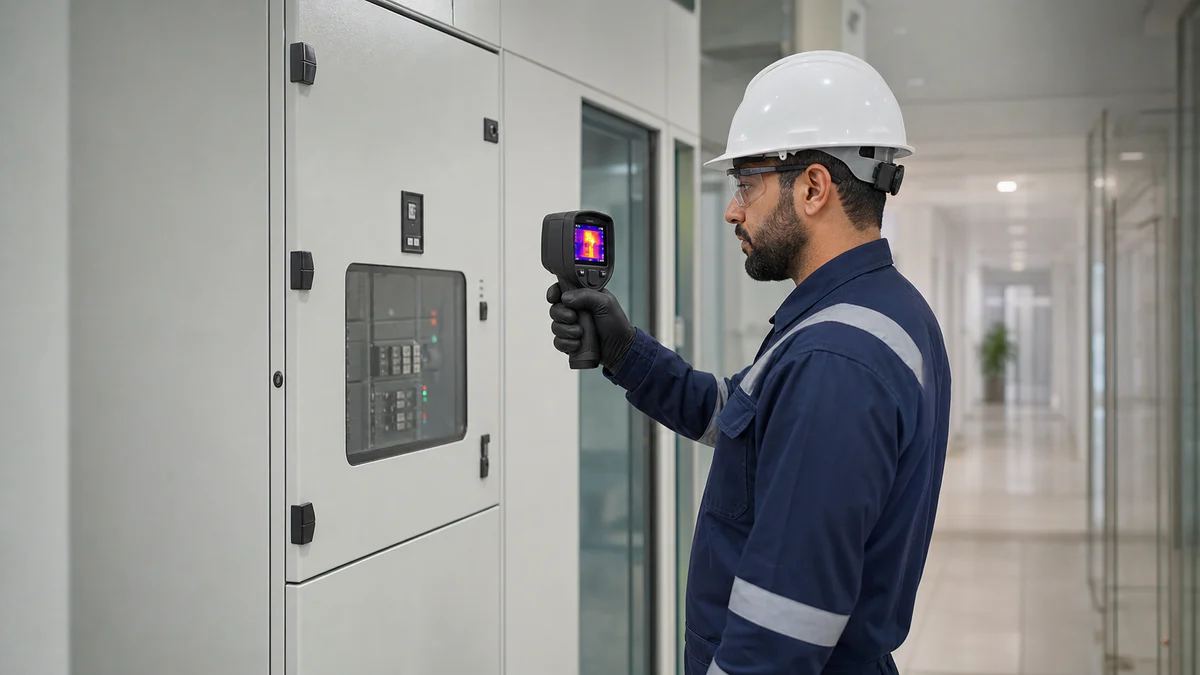
More photos related to Scheduled AC Maintenance in Jeddah
Frequently asked questions about Scheduled AC Maintenance in Jeddah
Replacement is advisable when the unit is past its expected service life and faults keep recurring across different components, or when the repair cost approaches half the price of a newer, more efficient unit. We give you an honest assessment that helps you make the more economical decision.
First check the power supply, the breaker, and that voltage is present, and check the remote settings. If it still will not start, the cause may be electrical — a capacitor, contactor, or control board. Contact us for a safe, precise inspection rather than opening the electrical components yourself.
Absolutely. We commit to quoting the price up front, after the assessment and once the required work is defined, and we begin only after your explicit approval. Labor and parts costs are itemized clearly for you — no hidden fees and no surprises after the job is done.
Comprehensive servicing is best done before the start of summer: the inspection, cleaning, and refrigerant adjustment prepare the unit for the long hot days and reduce the chance of a breakdown at the very times you need it most.
Visit length depends on the type of service: routine maintenance or cleaning may take one to two hours, while complex faults that require brazing, evacuation, and recharging can take longer. We work to close out most faults in a single visit whenever that is technically possible.
The cause is usually a refrigerant shortfall or accumulated dirt forcing the unit to run longer hours for the same coolness, or an improper installation losing cooling along the way. A comprehensive inspection identifies the source of the waste, and treating it brings the bill down noticeably.
Pressure washing removes muddy and salty deposits from deep inside the cooling coils, which raises cooling efficiency and speed, reduces the load on the compressor, and lowers electricity consumption — as well as eliminating bacteria, mold, and unpleasant odors and delivering clean, healthy air.
Yes. Running an AC on a low refrigerant charge raises the compressor's temperature and increases its load, and can lead to repeated thermal cutouts or long-term damage. That is why the cause of the shortfall must be found and treated — not merely recharged over.