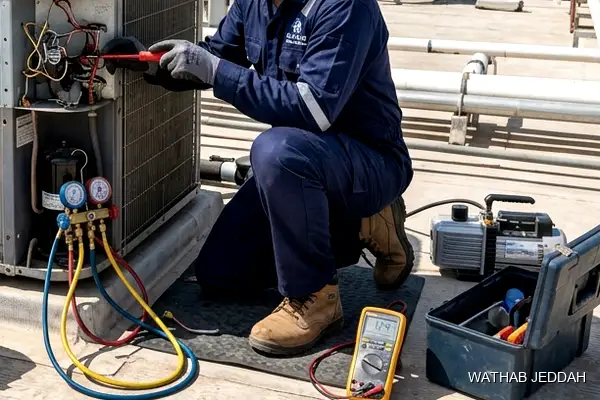
Explore the specialties of Installation, Rough-In & Copper Piping
Pick the service or area you need to see the technical details, the inspection steps, and the factors that shape the scope of work and the price.
List of services and sub-sections:
- AC Installation in Jeddah
- AC Installation Company in Jeddah
- AC Installation Technician in Jeddah
- Split AC Installation in Jeddah
- Window AC Installation in Jeddah
- Central AC Installation in Jeddah
- Concealed AC Installation in Jeddah
- Hidden Duct AC Installation in Jeddah
- Floor-Standing AC Installation in Jeddah
- Desert Cooler Installation in Jeddah
- Packaged Unit Installation in Jeddah
- VRF System Installation in Jeddah
- VRV System Installation in Jeddah
- Chiller Installation in Jeddah
- Air Handling Unit Installation in Jeddah
- AC Duct Installation in Jeddah
- AC Rough-In Piping in Jeddah
- Split AC Rough-In Piping in Jeddah
- Central AC Rough-In Piping in Jeddah
- Concealed AC Rough-In Piping in Jeddah
- Villa AC Rough-In Piping in Jeddah
- Apartment AC Rough-In Piping in Jeddah
- Office AC Rough-In Piping in Jeddah
- Shop AC Rough-In Piping in Jeddah
- Restaurant AC Rough-In Piping in Jeddah
- Warehouse AC Rough-In Piping in Jeddah
- AC Copper Piping Extension in Jeddah
- AC Copper Piping Technician in Jeddah
- AC Copper Pipe Installation in Jeddah
- AC Copper Pipe Replacement in Jeddah
- AC Copper Pipe Brazing in Jeddah
- AC Pipe Pressure Testing in Jeddah
- Copper Pipe Insulation in Jeddah
- AC Drain Line Extension in Jeddah
- AC Electrical Wiring in Jeddah
- AC Mounting Base Installation in Jeddah
- Split AC Bracket Installation in Jeddah
- AC Outdoor Unit Installation in Jeddah
- AC Relocation in Jeddah
- AC Removal and Reinstallation in Jeddah
- Split AC Removal in Jeddah
- Split AC Relocation Between Homes in Jeddah
- AC Reinstallation in Jeddah
- New AC Installation in Jeddah
- Old AC Replacement in Jeddah
- Ducted Split Installation in Jeddah
- Custom AC Ductwork in Jeddah
- AC Duct Fabrication in Jeddah
- AC Duct Insulation in Jeddah
- AC Duct Maintenance in Jeddah
- AC Duct Rerouting in Jeddah
- AC Air Outlet Installation in Jeddah
- AC Grille Installation in Jeddah
- AC Diffuser Installation in Jeddah
- AC Air Balancing in Jeddah
- AC System Design in Jeddah
- AC Load Calculation in Jeddah
- Central AC Contractor in Jeddah
- AC Duct Contractor in Jeddah
- AC Rough-In Contractor in Jeddah
Key information and practical guidance about Installation, Rough-In & Copper Piping

Air conditioners in Jeddah are affected by heat, humidity, dust, and the position of the outdoor unit, yet the right maintenance schedule varies with operating hours, unit type, and site condition. A methodical inspection reviews airflow, drainage, electrics, and the refrigerant circuit, then ties every recommended action to a clear measurement instead of assuming every unit needs the same procedure.
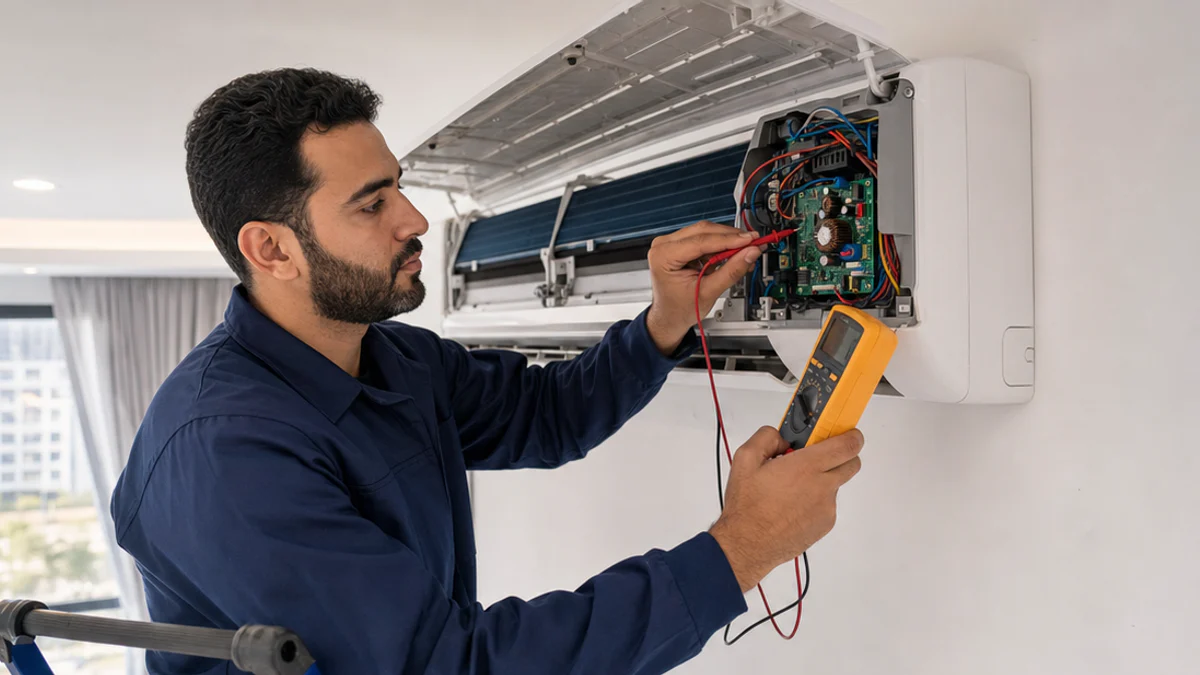
The technician uses the tools that suit the reported issue, such as electrical, temperature, and airflow meters, and leak detection when needed. The scope of work and the price are explained to the customer before execution, and the running result is reviewed afterwards. A phone description is not a final diagnosis, and availability and arrival time vary with demand and location.
A practical reference from Wathab AC
A professional guide related to: Installation, Rough-In & Copper Piping
This guide gives you a practical way to make the right decision when requesting an AC service in Jeddah. Its purpose is to clarify what should be inspected, which information helps the technician, how to compare a service quote, and what you can safely do before the visit. The content is educational and does not replace an on-site inspection, because a single symptom can come from electrical or mechanical causes or from an airflow problem, and no part should be replaced — and no refrigerant added — before the cause is measured and documented.


1. Start with a clear description of the problem
Before getting in touch, note the unit's type, brand, and approximate age, and record when the fault appeared and whether it happens constantly or only after a period of running. Mention whether the air is weak or warm, and whether there is a smell, a noise, water, or an error code on the display. It helps to photograph the data label, the error code, and the location of the outdoor unit without opening any covers. These details are not enough for a final diagnosis, but they help assign the right technician and prepare the likely instruments and materials, and they prevent a simple cleaning job from turning into an unprepared diagnostic visit.
2. Separate the symptom from the cause
Weak cooling is a good example: it can be caused by a clogged filter, a dirty evaporator, a weak fan, a leak in the refrigerant circuit, a sensor giving a false reading, or a heat load beyond the unit's capacity. Likewise, dripping water can come from a blocked drain, an incorrectly tilted unit, or an evaporator that froze and then thawed. So never treat a phrase like "it needs refrigerant" or "the compressor is dead" as a final verdict unless readings and inspection support it. Professional diagnosis tests hypotheses step by step instead of swapping parts by guesswork.
3. What does a professional inspection include?
The inspection starts by observing the running condition, then measuring the air temperature difference and reviewing airflow and the cleanliness of the filters and heat exchanger. Next, the connections, insulation, capacitors, sensors, and current draw are checked according to the unit type, and the condensate drainage and pipe slopes are reviewed. If there are signs of a refrigerant-circuit problem, pressures and line temperatures are measured and interpreted against the ambient temperature and the room load, not as isolated numbers. In central systems the inspection extends to the ducts, dampers, thermostats, and air balancing. A good outcome is an understandable report that ties each measurement to the proposed action.
4. Important questions before approving the work
- What is the likely cause, and which measurement or indicator supports it?
- Does the proposed repair address the cause, or only ease the symptom temporarily?
- Which parts and materials are needed, and are compatible alternatives available?
- What is the price range before starting, and what circumstances could change it?
- Which tests will be run after the work to prove performance is restored?
- What are the details of any workmanship or part warranty, if available, and its exclusions?
Asking for these answers is not making things difficult — it is how a clear agreement is reached. Replacing an expensive part should never begin before the cause is explained and your approval obtained. If the final price cannot be set before opening the unit or running a pressure test, a diagnostic fee and an approximate range can be agreed, with fresh approval sought whenever a significant new finding appears.
5. AC cleaning is not a single step
Surface-cleaning the filter is different from washing the evaporator, the drain pan, and the blower, and different again from cleaning the outdoor condenser or the air ducts. The right service is chosen based on where the dirt is, the unit's symptoms, and how accessible it is. The wall, furniture, and electronics board must be protected, the water pressure must not bend the aluminium fins, and the wash water should be collected and the drain checked for free flow. Harsh chemicals or fragrances are no substitute for removing deposits and can leave unpleasant residue. After cleaning, the unit should be run and checked for leaks, noise, and airflow before the work area is closed up.
6. Refrigerant charging needs a clear reason
A healthy refrigerant circuit is a sealed loop, so repeated loss calls for a search for a leak or the trace of a previous repair. Topping up blindly may mask the problem temporarily, and can raise pressures or hurt efficiency if the charge exceeds what is required. The professional procedure identifies the refrigerant type from the unit's data plate, checks for leak indicators, repairs the leak where possible, and then performs evacuation and charging by weight or adjustment following the manufacturer's instructions and the nature of the system. Different refrigerant types must never be mixed, and gas should never be vented on site. Ask for the readings before and after charging, and why the technician expects the charge to remain stable.
7. Electrical safety comes first
An air conditioner carries a significant electrical load and operates where humidity and condensation can collect, so the power must be disconnected before covers are opened or connections touched. A hot breaker, a burning smell, repeated tripping, or blackened marks are signals to stop the unit and not keep retrying. A qualified technician checks terminal tightness, wire condition, earthing, the capacitor, and the current draw, and compares the protection rating with the unit's data. Fitting a bigger breaker to stop the tripping is not a repair; it can defeat the protection and increase the risk of damage to the wiring or the unit. Any change in the building's electrical panel should be made by a qualified electrician.
8. Drainage and condensation in Jeddah's climate
High humidity increases the amount of water condensing on the evaporator, so the drain path needs a continuous slope, proper insulation, and an outlet that does not return water to the unit. Dust and slime in the pan can block the pipe, and weak airflow can freeze the evaporator so that a large amount of water appears when it thaws. A good inspection does not stop at a quick flush; it reviews the pan, the hose, the insulation, the slope, and the condensate pump if fitted, and checks for a break or leak inside the wall. You can keep an eye on the drain outlet, but inserting sharp tools or unsuitable chemicals can damage the pipes.
9. Choosing unit capacity and how it affects performance
Capacity is not chosen from the room's floor area alone. Glass frontages, sun orientation, ceiling height, insulation, the number of occupants, heat-producing appliances, and air leakage all change the load. An undersized unit may run continuously without reaching comfort, while a heavily oversized one may short-cycle and fail to remove humidity properly. For a new installation or a persistent chronic problem, ask for a load estimate instead of automatically replacing the unit with the same size. In commercial spaces, review operating hours, occupancy density, and fresh-air needs. A balanced choice supports comfort, better energy use, and longer component life.
10. Installation quality matters more than the unit's looks
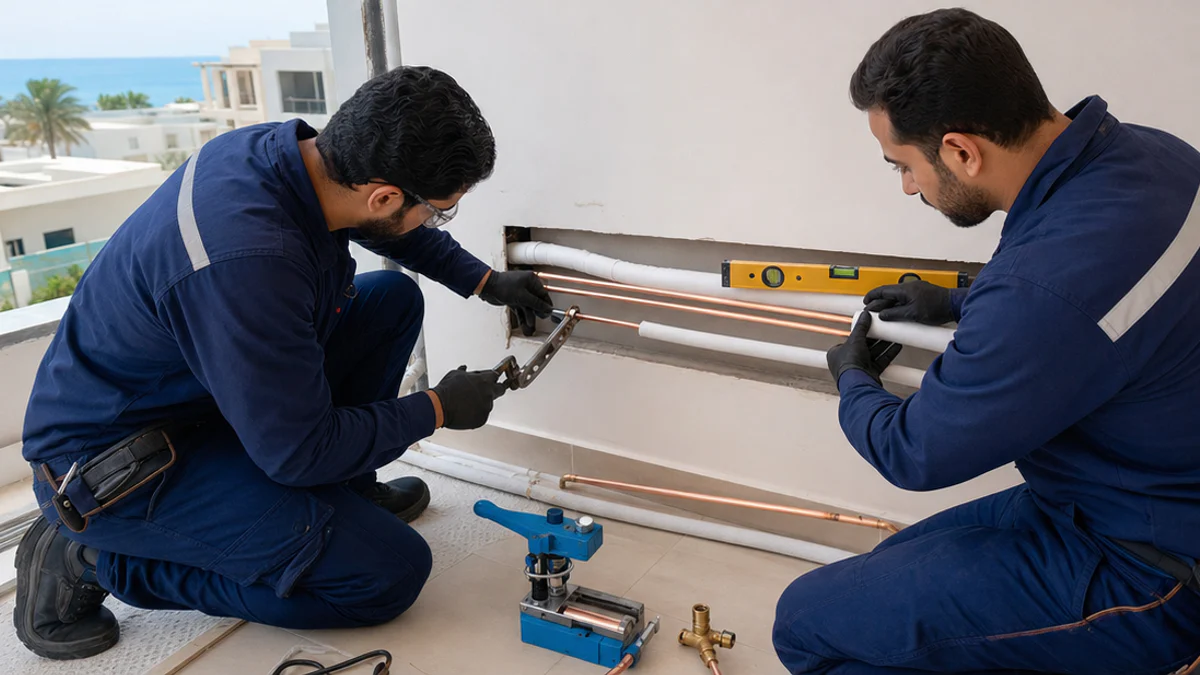
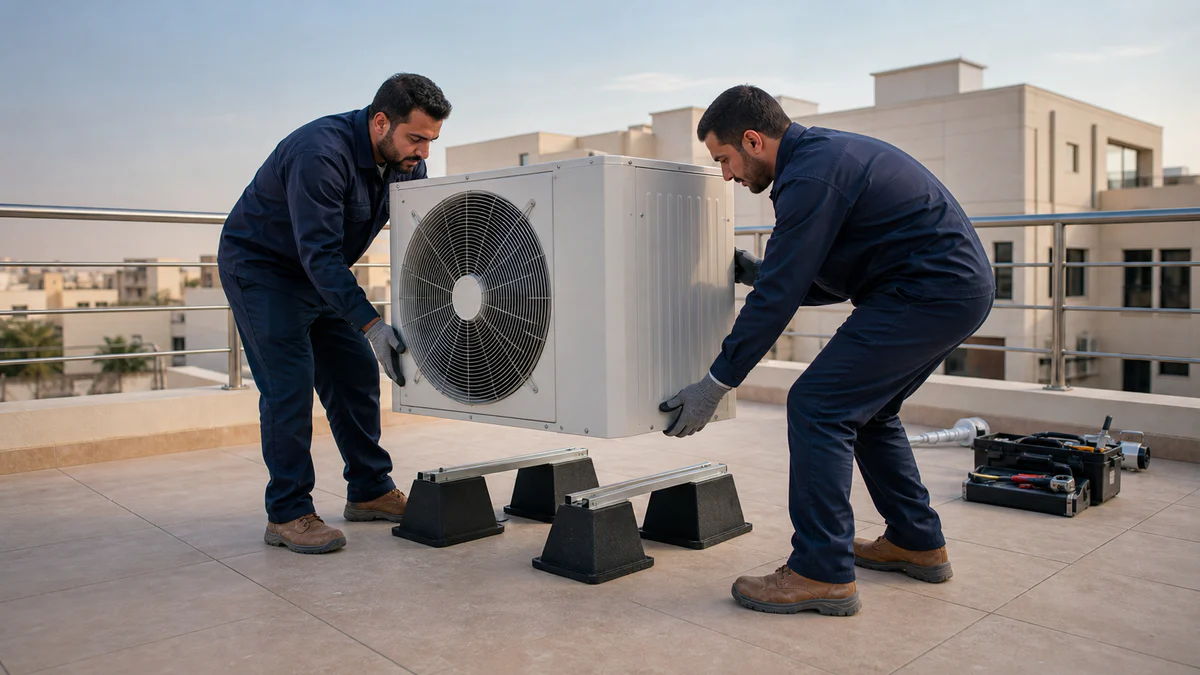
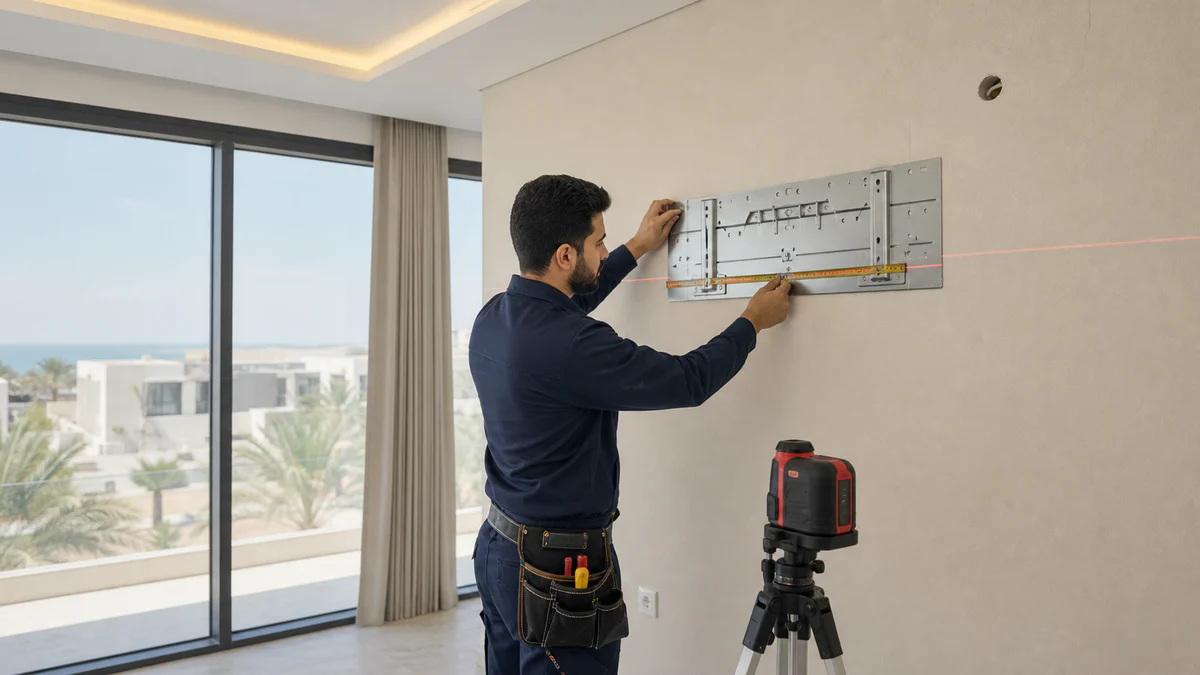
In split installation, the position must allow good air distribution and future maintenance, the indoor unit must be levelled correctly for drainage, the wall opening protected, and the copper run insulated properly without damaging bends. The outdoor unit needs a stable base, clearance for air intake and discharge, and distance from heat sources where possible. After the circuit is connected, a leak test and evacuation are performed before the valves are opened, following the manufacturer's instructions. The electrical supply and protection breaker are reviewed as well. Final photos alone do not prove quality; ask for the tests and concealed materials to be explained before the route or ceiling is closed.
11. Copper piping, insulation, and the pipe route
The copper's diameter, wall thickness, run length, and vertical differences must match the unit's specifications. Brazing needs suitable internal protection and cleanliness to prevent oxides or debris entering the circuit. Patchy or compressed insulation allows condensation and cooling loss, while unprotected joints suffer from the weather. In early first-fix work, it pays to document the route with photos, leave the ends tightly sealed, and place the electrical and drain points where they can be serviced. Do not accept a route that hides critical joints with no way to inspect them, and do not settle the cost on a per-metre basis alone without defining the copper grade, insulation, and accessories.
12. Central AC and duct work
In a central system the unit itself may be sound while the air distribution is unbalanced because of duct leakage, weak insulation, an unsuitable filter, or a closed damper. Assessment starts by comparing temperatures and outlet airflows and reviewing static pressure and the return path, then inspecting the unit itself. Duct cleaning is not an automatic cure for every smell or dust problem; the source must be identified first — a dirty filter, moisture, or a leaking opening. Any new openings or size changes need calculation so they do not raise noise or choke the fan. For facilities, a regular log of readings, faults, and filter usage is valuable.
13. Read AC noises with caution
A whistle may relate to air leakage or friction, knocking may come from a loose part, and humming may be electrical or from a struggling motor — but sound alone does not identify the part. Note when it appears: at start-up, during running, at shutdown, or at a specific fan speed. Switch the unit off if the noise is new and loud or accompanied by a smell or vibration. Never put your hand or a tool near the fan. During the visit, covers and mounts should be secured, and the fan, bearings, compressor, and connections inspected, then the unit run in more than one mode to confirm the cause is gone — not just the noise.
14. Dealing with odours and air quality
A smell can come from a dirty filter, a damp drain pan, materials inside the room, damaged insulation, or an outside source arriving through the airflow path. The source should be cleaned and dried rather than masked with fragrance. It is important to use products suitable for coils and drain pans and to ventilate the space after the work. If you notice a burning smell, switch the unit off and disconnect the power — do not spray freshener or wait for it to fade. People with allergies need more care over filter type and replacement timing, but a denser filter is not right for every unit; it can reduce airflow if the fan cannot handle its resistance.
15. A maintenance program you can actually keep
The best program is based on usage and environment, not a rigid one-size-fits-all date. Check the filter visually every few weeks in the operating season, and clean or replace it according to its type and the manufacturer's instructions. Keep clearance around the outdoor unit and remove obstructions without bending the fins. Watch the drainage, the noise, and how long the unit takes to reach the set temperature. Before summer, request a fuller inspection if the unit runs long hours or showed issues last season. For shops and offices, keep a log of visit dates, readings, and parts — that way deterioration is caught early instead of waiting for a breakdown.
16. What can you safely do yourself?
You can check the remote settings, replace its batteries, clean a washable filter after switching the unit off and drying it thoroughly, clear external obstructions away from electrical parts, and make sure windows and doors close properly. You can also try a moderate set temperature and observe the airflow and drainage. Avoid opening the electrical panel, dismantling the unit, bending the copper, adding refrigerant, or spraying water near components. Do not use makeshift wiring or a larger breaker. If a simple step does not work, note the result and call instead of repeatedly restarting; repeated experiments can widen the fault.
17. Understanding the price without misleading numbers
The price is shaped by the unit type, ease of access, timing, site condition, materials, and the part required, so a generic published figure is no substitute for diagnosis. A clear quote separates the inspection fee from the labour and materials, states the quantity, specification, and tax where applicable, and says whether leak repair, evacuation, or testing is inside the scope. Compare quotes on the same details; a cheaper offer may exclude essential work. Do not pay for a part whose need was not explained, and keep the approval message and the work description. If the scope changes, ask for an updated estimate before continuing.
18. Alternative parts and compatibility
The word "original" on its own is not enough; what matters is the part number, its specifications, and its compatibility with the unit's model and operating conditions. Sometimes a manufacturer part is available, sometimes a matching alternative from a reliable supplier, and the difference in price, availability, and warranty should be explained. With capacitors, sensors, motors, and control boards, an error in capacitance, voltage, or wiring can cause new damage. Ask to see the part's data where possible and keep the old part until testing is complete. Do not accept bypassed protection circuits, or a temporary workaround presented as a permanent repair without written clarification.
19. Testing after the repair
The service does not end when the fan spins. The unit should run for a suitable period, with the air temperatures or the readings tied to the fault measured, and the current confirmed stable with no leaks or abnormal noise. After drain cleaning, water flow is tested. After an electrical repair, the connection points and protection are reviewed. After work on the refrigerant circuit, the readings are rechecked under stable conditions. The technician explains what changed and what to expect over the following hours, and leaves the site clean. If the fault is intermittent and cannot be confirmed immediately, that should be said openly and a follow-up method agreed, instead of declaring an unverifiable success.
20. Warranty and follow-up
A good warranty is specific: it names the work or part covered, the duration, what to do when a problem appears, and the exclusions such as misuse or a separate fault. Do not assume a manufacturer's warranty covers removal or transport labour, or that a service warranty covers every component of the unit. Keep the invoice or the work-details message, the photos, and the readings. When reporting again, explain whether the same symptom returned and when it started. Professional follow-up reviews the record before proposing a new visit. Vague unwritten promises help neither the customer nor the service provider in establishing responsibility.
21. Brands and older units
Mentioning a brand does not imply official accreditation from it; it is best to ask the provider plainly about their experience with the model and the availability of its manual and parts. Older units call for a balance between repair cost, efficiency, the availability of the refrigerant and parts, and general condition. There is no single age that dictates replacement; repairing a minor part may make sense for one unit while faults keep recurring in another. Ask for a written comparison covering the expected cost, the unit's consumption, the impact of changing a major component, and the requirements of a new installation. A good decision rests on lifetime cost, not today's price alone.
22. Preparing the site before the technician arrives
Provide safe space around the unit, move fragile items away, and locate the electrical panel, the drain outlet, and the outdoor unit. If reaching the roof or the false ceiling needs a permit, a key, or a special ladder, say so when booking. Keep children and pets away from the work area, and tell the technician about any water leak near electricity. In facilities, appoint someone authorized to approve and define acceptable system downtime. Simple preparation cuts waiting and lets the visit's time go into diagnosis and execution instead of hunting for access points.
23. Signs that mean switch the unit off immediately
Stop the unit and switch off the breaker safely if there is smoke, a burning smell, sparks, unusual heat in the wiring, a loud impact noise, or water leaking onto an electrical source. Likewise, do not keep running a compressor that tries to start and cuts out rapidly and repeatedly, or an outdoor unit vibrating violently. If disconnection is not safe, move away and call a qualified party. Never touch a wet unit or try to dry an electrical board with a hair dryer. These situations matter more than keeping cool; isolate the hazard first, then describe it precisely when asking for help.
24. How do you choose the right service provider?
Look for a clear means of contact, a realistic description of the service, and a willingness to state the scope of work before starting. Judge the quality of the questions the provider asks and their ability to explain measurements in plain language. Avoid anyone who confirms an expensive diagnosis from a short message or pressures you to approve without a price or alternatives. Photos and reviews can help but are not the only evidence; what matters most is consistency between the report, the inspection, the quote, and the testing. For a large project, ask for a survey, a plan, materials, a schedule, and safety responsibilities, rather than treating it like a simple home visit.
25. A short handover checklist
- Confirm the main symptom is gone and the unit was tested for a suitable period.
- Ask for an explanation of the cause, the work done, the part used, and the key readings.
- Check there is no water, exposed wiring, or unsecured cover.
- Keep the cost description, the warranty details, and the follow-up instructions.
- Ask when to clean the filter and which sign should prompt you to call again.
- Do not sign off on a scope different from what was performed before the change is explained.
With these steps, the subject of Installation, Rough-In & Copper Piping becomes part of an organized decision rather than a rushed reaction to the heat. When the details are clear, the diagnosis is based on measurement, the price range is known, and the testing is documented, the chances of a repeat fault drop and the experience improves for customer and technician alike. To reach Wathab AC you can use the phone or WhatsApp; availability, the appointment, and the visit scope are confirmed before execution, according to the site condition and unit type.