Service details and why it matters
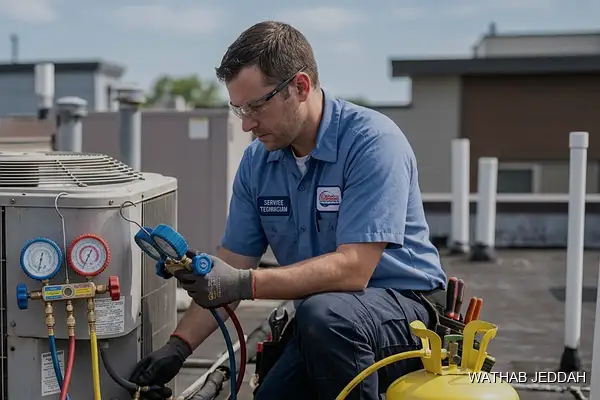
When your AC fails in Jeddah's heat, speed and accuracy become non-negotiable. That is why AC Water Leak Repair in Jeddah at Wathab Jeddah AC Services is designed as a practical response that resolves the problem in one visit whenever possible. We arrive with the tools and the most common spare parts, and we fix the fault after identifying its root cause — not just the visible symptom.
We treat every unit as an individual case with its own circumstances, weighing its age, type, and usage pattern when choosing between an economical repair and replacement. With every service you get clear pricing announced up front, a documented warranty where applicable, and follow-up after completion — because our goal is a unit that runs at its normal efficiency without repeated breakdowns that cost you more.
Technical problems we solve in Jeddah
Diagnosing the compressor or the refrigeration circuit means interpreting pressure, pipe temperatures, and current draw together with the state of the airflow and the ambient temperature. A single reading in isolation can mislead, and adding refrigerant without a leak check may hide the problem temporarily.
In the AC Water Leak Repair in Jeddah service the customer is told what was measured, what has been proven and what remains a possibility, and the treatment options and their cost before execution. If the fault is intermittent, the conditions under which it appears and the way to track it are documented instead of offering a promise that cannot be verified.
Why choose Wathab AC?
- Wide coverage across Jeddah's districts: We reach the city's north, south, east, west, and center, and coordinate same-day visits when an appointment slot is available.
- Energy-efficiency focus: We concentrate on returning your unit to its design efficiency to bring the electricity bill down — not merely getting it running again.
- Cleanliness while we work: We use protective covers for furniture and flooring during washing, shielding your home from spray and grime.
- Honesty in every dealing: We advise whatever genuinely serves your interest, even when that is the simplest and least expensive fix.
Service quality comparison
The difference between parts matching manufacturer specifications and cheap imitation parts:
| Criterion | Manufacturer-spec parts | Imitation parts |
|---|---|---|
| Operating life | Long, in line with factory specifications | Short, and prone to rapid failure |
| Electrical safety | Built to withstand Jeddah's heavy heat loads | May cause thermal cutouts or burnout |
| Warranty | Covered by a documented warranty | No real warranty |
| Long-term cost | Lower, thanks to fewer replacements | Higher, due to repeated failures |
How our Jeddah team works
- Request intake: Collecting the unit type, a description of the problem, and the essential site details.
- Inspecting the airflow and any traces of a leak: The step starts from what matches the AC Water Leak Repair in Jeddah service, instead of applying a generic checklist to every unit.
- Measuring the circuit under stable operating conditions: The finding is tied to a measurement or test that can be explained to the customer.
- Repairing the cause, then adjusting to the unit’s specifications: No costly work begins before the scope and price are made clear and approval is obtained.
- Testing and handover: Running the unit, reviewing the function tied to the reported issue, and recording the follow-up instructions.
Tools and equipment we use
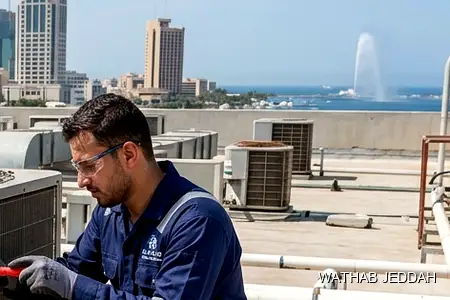
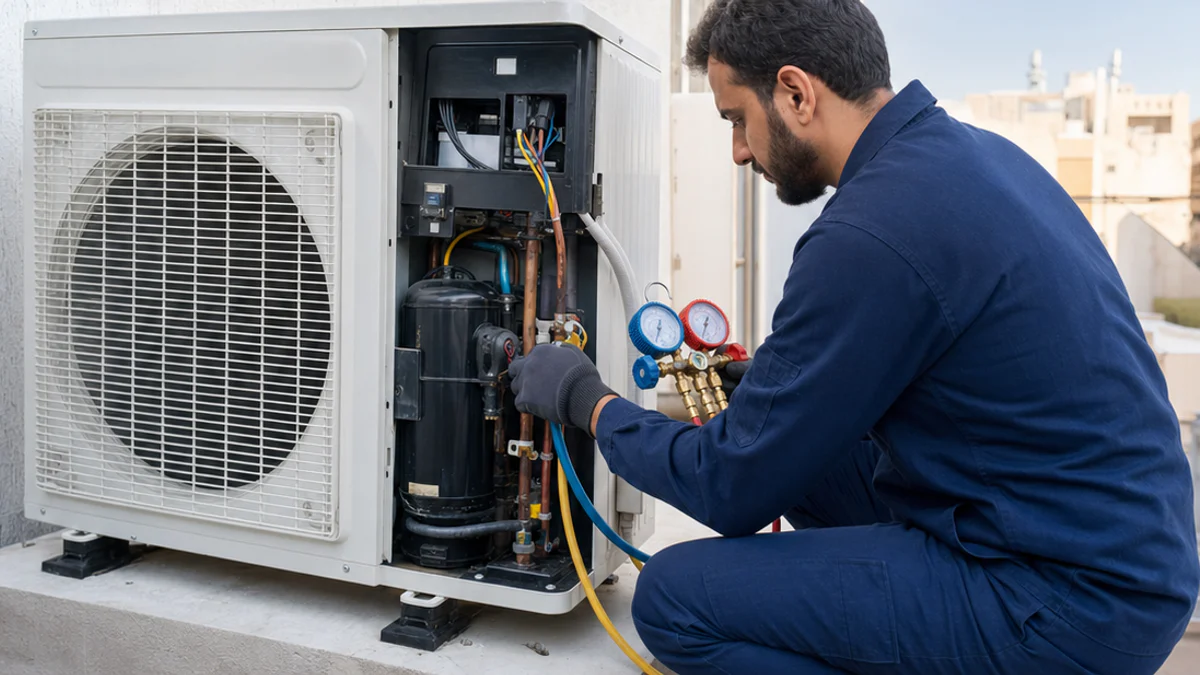
- A manifold gauge set matched to the refrigerant type: Used when the inspection findings call for it, not merely to be listed as part of the service.
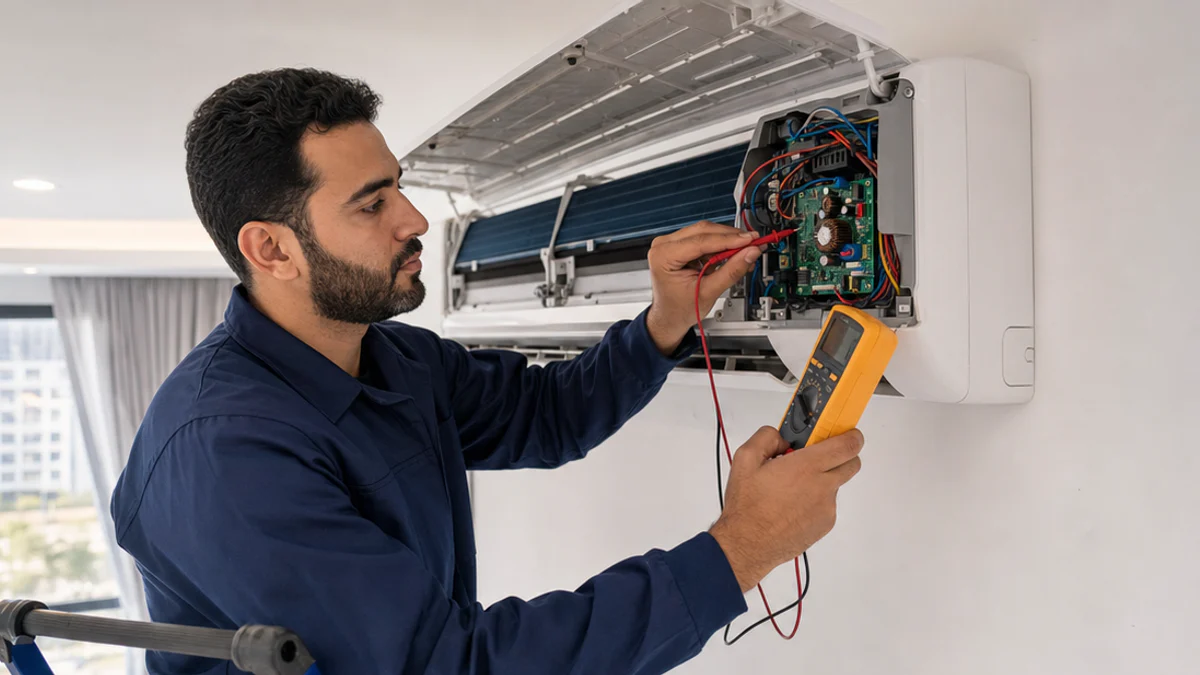
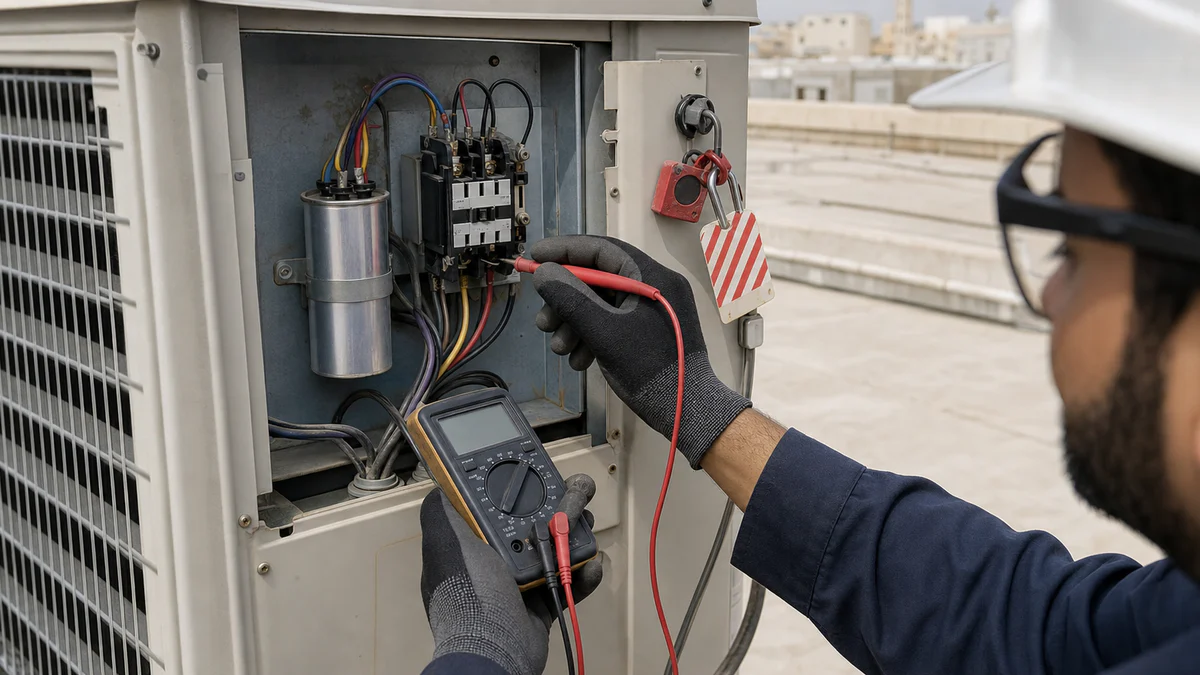
- A thermometer and a clamp meter: Used when the inspection findings call for it, not merely to be listed as part of the service.
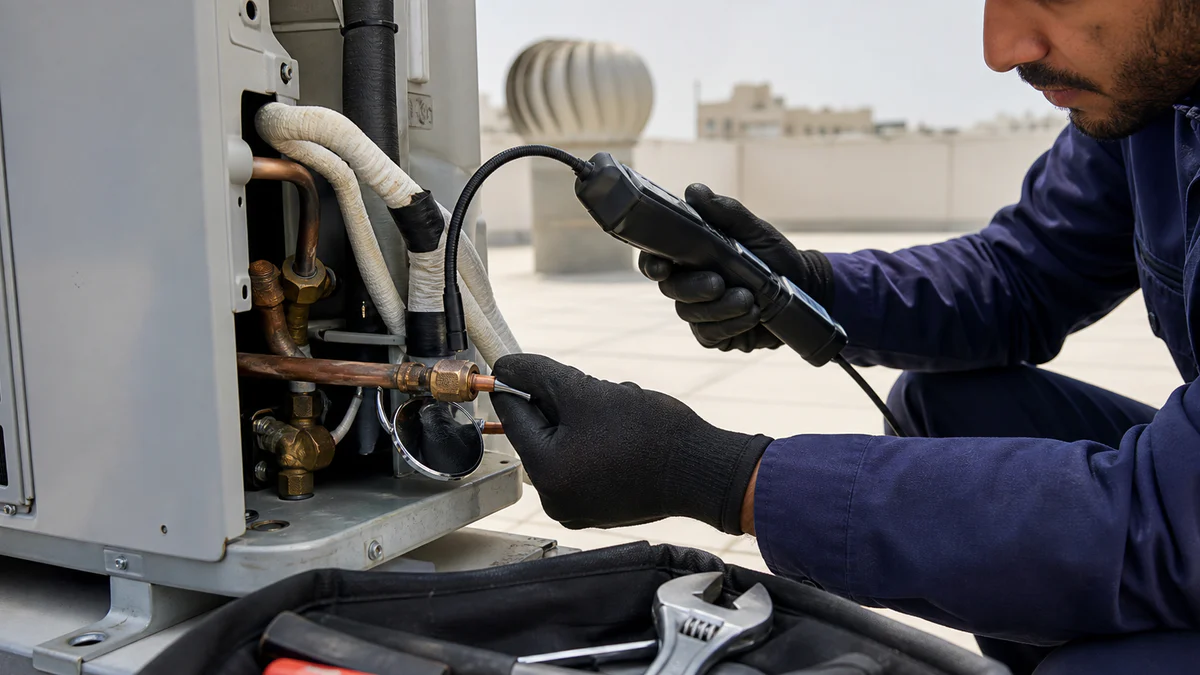
- A leak detector or nitrogen, depending on the test: Used when the inspection findings call for it, not merely to be listed as part of the service.
- A vacuum pump and a charging scale when charging is performed: Used when the inspection findings call for it, not merely to be listed as part of the service.
AC types and systems we serve
- Villas and palaces: Roughing-in and maintenance of multi-unit systems, with cooling balanced across floors and wings.
- Apartments and residential buildings: Practical solutions that respect limited space and constrained access to outdoor units.
- Administrative offices: Uniform cooling that maintains a comfortable, productive work environment through business hours.
- Commercial premises: Restaurants, cafes, and showrooms that need strong, continuous cooling with no failures at peak times.
Environment and climate factors in Jeddah
We do not attach the AC Water Leak Repair in Jeddah service to a randomly picked district. This page covers Jeddah in general, and the actual appointment is set once the address and availability are known. When we receive a request we focus on the visible symptom and the electrical and cooling readings before any part is replaced, then prepare the visit to suit the system type. Coastal humidity, dust, and rooftop heat all affect how units perform in Jeddah, but the technical decision always rests on the unit's own measurements and location — not on generic assumptions about the neighborhood.
For a more accurate estimate, send the AC type, a brief description of the symptom, and a photo of the data plate if possible, and mention any difficulty reaching the roof or the false ceiling. The support team confirms the visit scope and the available time before setting out, and a phone description is never treated as a final diagnosis or as approval to replace a part.
What determines the service cost
- The diagnostic inspection: We start with a careful assessment to determine the work actually required and avoid any unnecessary costs.
- Repair prioritized over replacement: We recommend the more economical fix, and suggest replacement only when it is genuinely the better financial choice.
- Transparency in pricing: We itemize labor and parts separately, so you know where every riyal goes.
- Value for the price: We focus on lasting quality that reduces repeat faults and saves you future expenses.
Real-world case study in Jeddah
If measurement proves a part has failed, its ratings and compatibility with the model are reviewed and the repair-or-replace options are explained. If the problem is intermittent, the customer is told what was tested and how to track the symptom, instead of being handed an unconfirmed diagnosis.
Tips to keep your AC efficient
- Keep the air outlets clean: Wipe the distribution grilles regularly to stop dust buildup from cutting the flow of cold air.
- Do not overdo lowering the temperature: Setting it far lower does not cool faster — it only raises consumption and strains the unit for nothing.
- Check the drainage after rain: Confirm the drain is working properly, especially after humidity waves or seasonal rains.
- Use a specialist for recharging: Never rely on haphazard refrigerant top-ups; a precise charge protects the compressor and saves energy.
Benefits of professional service
Working with a trusted provider for AC Water Leak Repair in Jeddah gives you complete clarity before any work begins. You know what your unit needs, what it will cost, and what warranty you will receive — so you decide on solid ground, with no pressure and no surprises. That clarity protects your money from the unnecessary repairs that can be pushed on you where transparency is missing.
Added to that is the reassurance that the work follows strict safety standards for handling electricity and refrigerant. Those standards protect you and your home from the real hazards that unqualified intervention can create. The value you receive is not just cold air — it is safety, peace of mind, and complete clarity in every dealing.
Our commitment and warranty
We regard the warranty at Wathab Jeddah AC Services as a contract of trust between us and the customer. We commit to executing every job to technical specification, and to fitting replaced parts that match manufacturer specifications and suit your unit and its operating conditions in Jeddah's hot climate. Should any shortcoming appear within the warranty period, we take responsibility for correcting it promptly.
That commitment lets you make your decision free of worry, because you know the provider you are dealing with stands behind its word. We believe this reassurance is among the most valuable things we offer alongside the technical service itself — a customer's peace of mind matters no less than the cold air that reaches them.
Common mistakes AC owners make
Relying on repeated temporary fixes instead of treating the root cause is a mistake many people fall into. Resetting the breaker every time it trips, or adding refrigerant every time the cooling weakens, without ever looking for the real cause, only postpones the problem and makes it worse. Proper treatment starts with diagnosing the cause, not sedating the symptom.
Some also delay calling a technician despite clear signals — strange noises, odors, or weakening cooling. Every day of delay can mean greater damage and a higher cost. Acting at the first sign saves you a great deal, and protects your unit from failures that could easily have been avoided.
Seasonal readiness in Jeddah's climate
Smart seasonal readiness for air conditioning in Jeddah starts with seeing the unit as an investment that needs periodic care, not a tool to be ignored until it fails. Scheduling a pre-summer inspection exposes the weak points early and allows them to be treated at a comfortable time — so you enter the hot season confident your unit will not fail you at the most critical moment.
After the peak heat passes, a closing review is the wise next step, correcting any stress the components absorbed during the months of intensive running. This balance between advance preparation and after-season review keeps the unit at its best, and makes caring for it an organized habit that protects your comfort and cuts the cost of sudden breakdowns.
Technical Supplement: Understanding How Your AC Works and How to Care for It
This supplement from Wathab Jeddah AC offers a simplified explanation to help home and facility owners understand the refrigeration cycle and the limits of safe self-care. It is educational content that does not replace the manufacturer's manual or an on-site inspection; differences in model, age, and installation method change the appropriate measurement and maintenance steps.
1. The Core Components of the Mechanical Refrigeration Cycle
The refrigeration cycle in air conditioners relies on four main components in a sealed loop, through which flows a refrigerant whose type varies with the unit's model and technical data:
- The compressor: the heart of the AC. It draws in low-pressure gas and compresses it, raising its temperature and pressure and pushing it toward the outdoor condenser. A failed compressor stops cooling completely.
- The condenser coil: the outdoor coil covered with aluminum fins. Its job is to reject the heat absorbed from the room to the outside, assisted by the condenser fan.
- The expansion valve: abruptly drops the pressure of the liquid refrigerant arriving from the condenser, which lowers its temperature and readies it to absorb heat inside the room.
- The evaporator coil: the indoor cooling coil inside the indoor unit. Cold refrigerant flows through it, absorbing the room's heat and humidity while the blower fan directs the cooled air back inside.
2. How Coastal Humidity and Dust Affect the Outdoor Unit
Jeddah's humidity, salts, and dust can accelerate deposit buildup and corrosion on the outdoor unit, weakening airflow and heat exchange. Cleaning the coil, however, requires safe electrical isolation, protection of the components, and the right choice of pressure and materials — so we do not recommend hosing the unit down or using a random cleaner. The timing of cleaning is decided after an inspection, in line with the manufacturer's instructions and the site's condition, while treating the cause of the corrosion or the airflow blockage rather than settling for a clean-looking surface.
3. Recommended Periodic Inspection and Preventive Maintenance Schedule
| Preventive maintenance task | Recommended frequency | Why it matters technically |
|---|---|---|
| Cleaning the indoor air filters | Check every two to four weeks depending on dust and usage | Helps keep airflow normal and reduces dust accumulation. |
| Clearing and cleaning the condensate drain line | As part of routine maintenance, or when slow drainage or leaking appears | Verifies the water flows freely at the right slope and cannot back up into the unit. |
| Inspecting and cleaning the outdoor unit as needed | Seasonally, or whenever airflow around the unit is obstructed | Removing obstructions with a suitable method, without damaging the fins or the electronics. |
| Checking refrigerant pressure and current draw | Per the manufacturer's recommendation, or when performance weakens | Comparing readings against specifications and finding the cause of a defect before adding refrigerant. |
4. Practical Tips to Reduce Electricity Consumption and Extend Your AC's Life
To avoid a sharp rise in electricity bills and protect your units from summer breakdowns, follow these engineering-based guidelines:
- Choose a comfortable, reasonable temperature: avoid setting it extremely low, and adjust the temperature to suit the occupancy, the humidity, and the unit's recommendations instead of relying on a single number for every site.
- Close windows and curtains fully: thermally sealing the room keeps cold air from escaping and outside heat from entering, easing the operating burden on the AC.
- Avoid strong heat sources: such as ovens and incandescent lighting inside air-conditioned rooms while the unit is running, to reduce the thermal load.
- Seal gaps and window cracks: weatherproofing the outer frames of windows and doors keeps out the humidity and grime that clog the filters and air passages.
To ask about an available appointment or describe your unit's condition, contact the Wathab Jeddah team at: 0567837359.
More photos related to AC Water Leak Repair in Jeddah
Frequently asked questions about AC Water Leak Repair in Jeddah
Ice usually forms because of weak airflow caused by a blocked filter or a dirty evaporator, or because the refrigerant charge is low. Treatment starts with cleaning the filter and evaporator and checking the charge, because treating the symptom without its cause brings the problem back quickly.
Yes, we have solid experience maintaining central and concealed systems: cleaning the ductwork, balancing air distribution, and repairing and insulating leaks at duct joints. We approach these systems with an engineering method that delivers uniform cooling and rational consumption.
Clean the air filters every two weeks, keep the outdoor unit well ventilated, set the thermostat to a moderate temperature around 24°C, and keep windows closed to seal the room. These simple habits preserve performance and reduce faults between technician visits.
This usually happens for several reasons: air filters clogged with dust, dirty evaporator and condenser coils blocking heat exchange, a refrigerant leak leaving the charge low, or a failed run capacitor or compressor. The Wathab Jeddah team runs a comprehensive inspection, pinpoints the cause precisely, and repairs it.
Yes. Running an AC on a low refrigerant charge raises the compressor's temperature and increases its load, and can lead to repeated thermal cutouts or long-term damage. That is why the cause of the shortfall must be found and treated — not merely recharged over.
Pressure washing removes muddy and salty deposits from deep inside the cooling coils, which raises cooling efficiency and speed, reduces the load on the compressor, and lowers electricity consumption — as well as eliminating bacteria, mold, and unpleasant odors and delivering clean, healthy air.
The cause is usually a refrigerant shortfall or accumulated dirt forcing the unit to run longer hours for the same coolness, or an improper installation losing cooling along the way. A comprehensive inspection identifies the source of the waste, and treating it brings the bill down noticeably.
Visit length depends on the type of service: routine maintenance or cleaning may take one to two hours, while complex faults that require brazing, evacuation, and recharging can take longer. We work to close out most faults in a single visit whenever that is technically possible.